Introduction
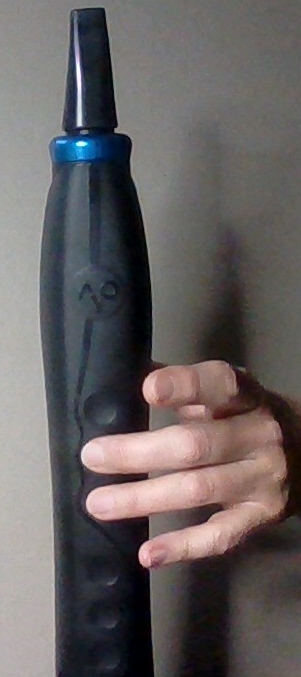
Have you ever asked yourself how you can become faster on your instrument? The answer normally is: practice, practice, practice. On the web you find some tricks to do this more effectively. But in the end it’s all hard work. With a wind controller, especially a Sylphyo or any controller with an EWI fingering, there is another important aspect to speed: optimising your fingering.
Only recently I found a comprehensible list of all EWI fingerings. You find it here: https://www.scribd.com/doc/52131251/EWI-Fingering-A-Somewhat-More-Complete-Listing
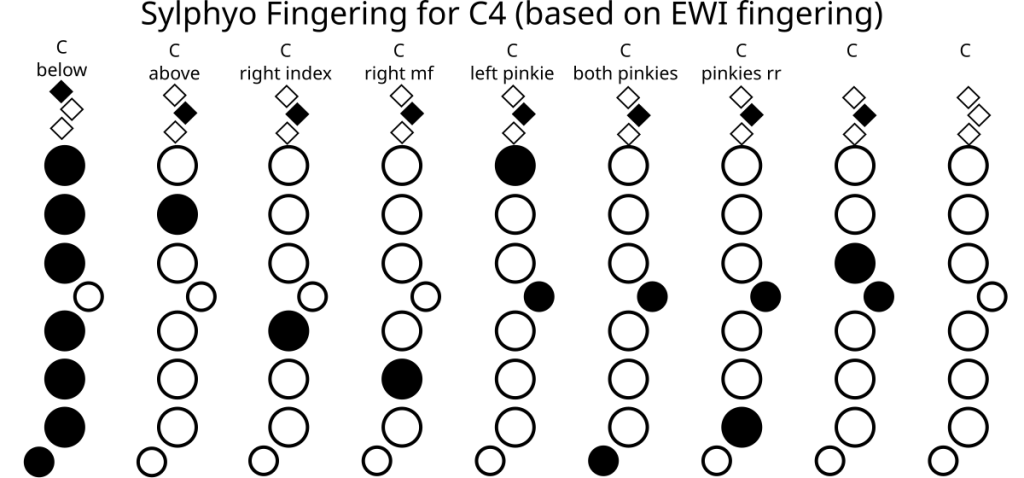
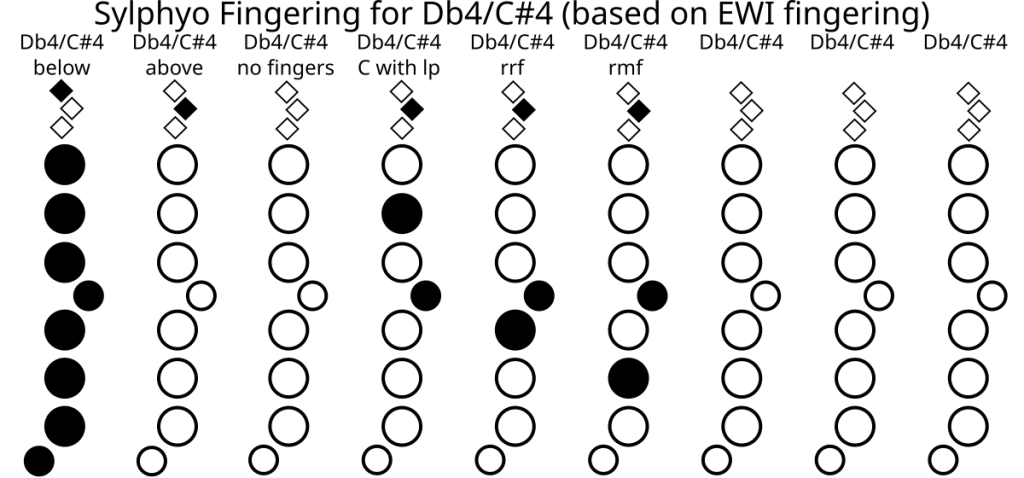
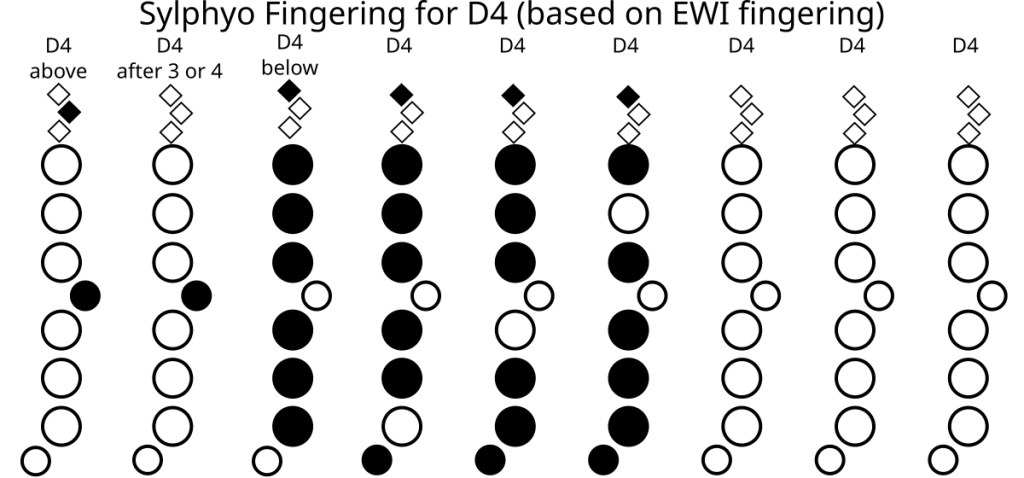
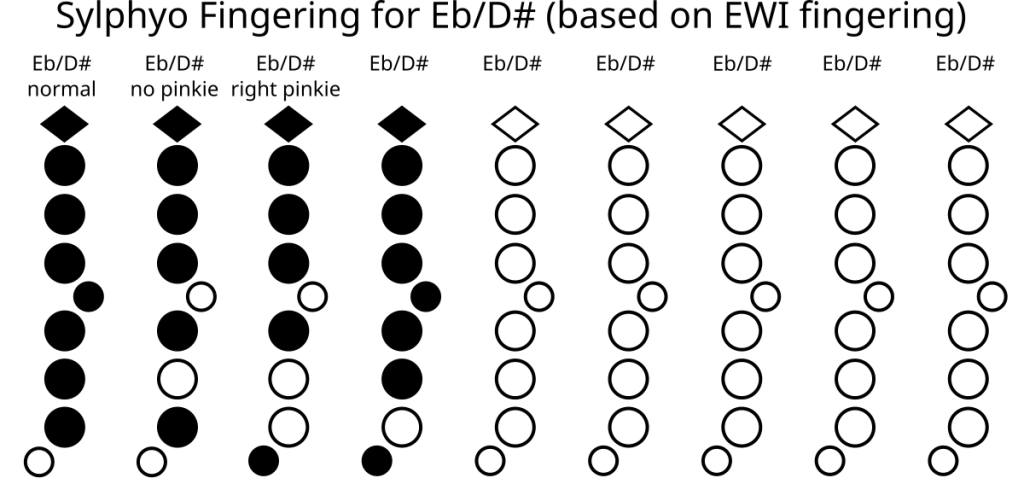
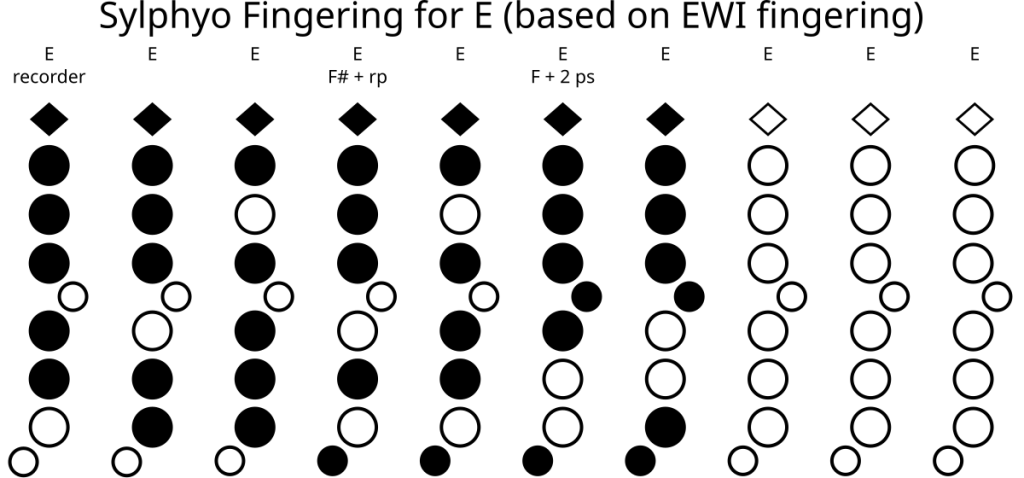
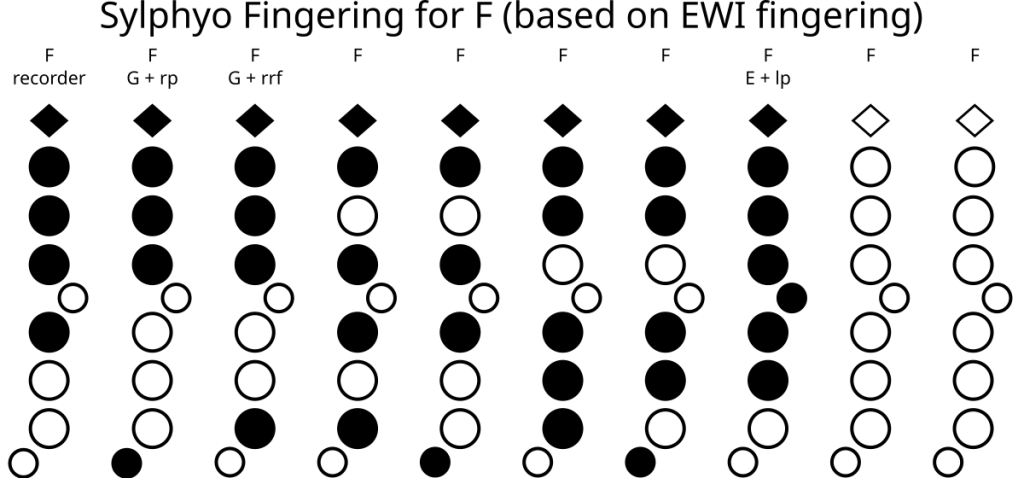
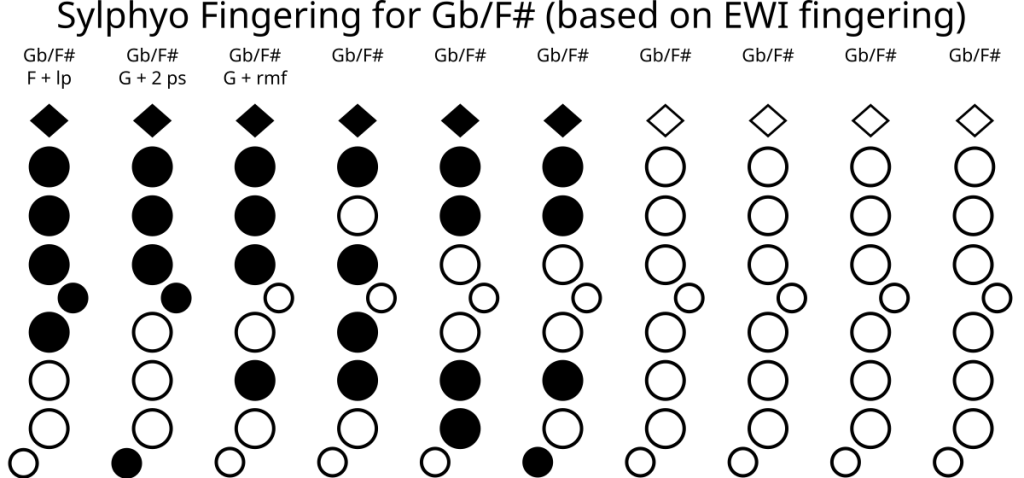
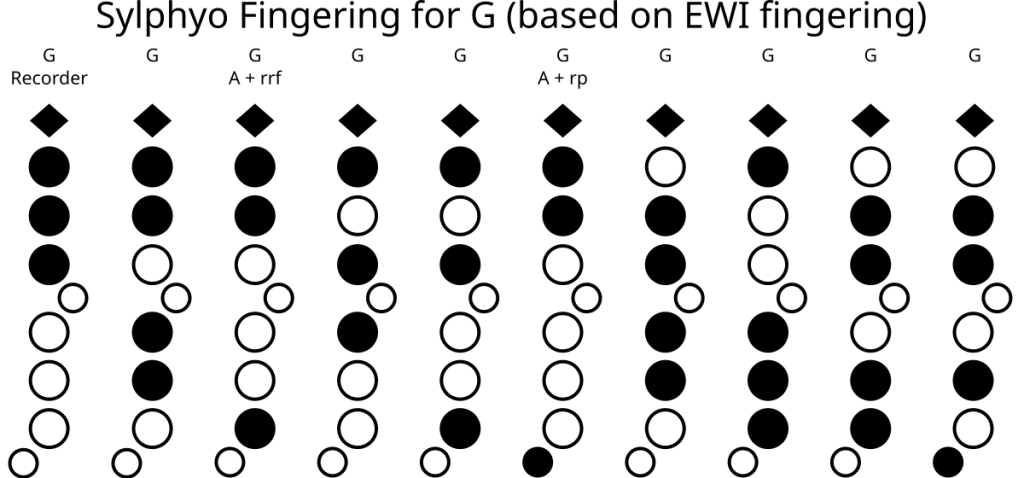
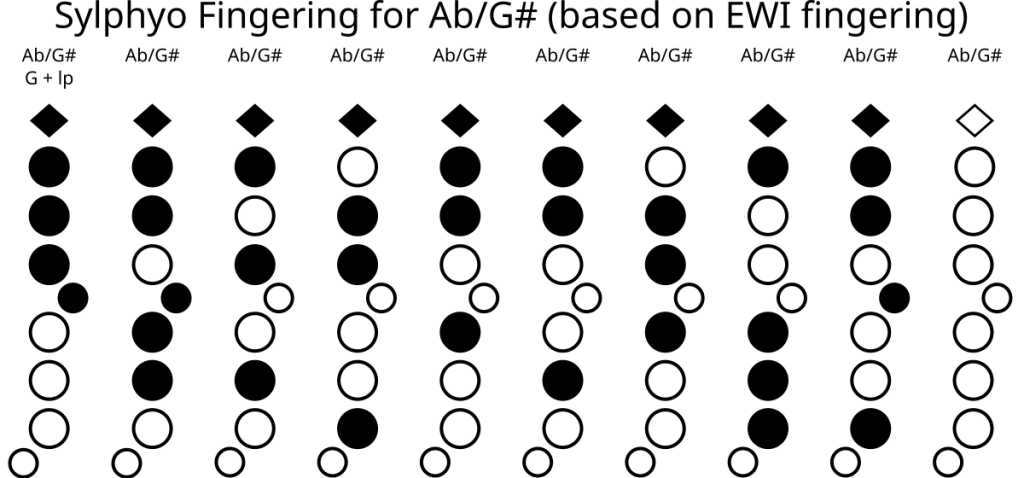
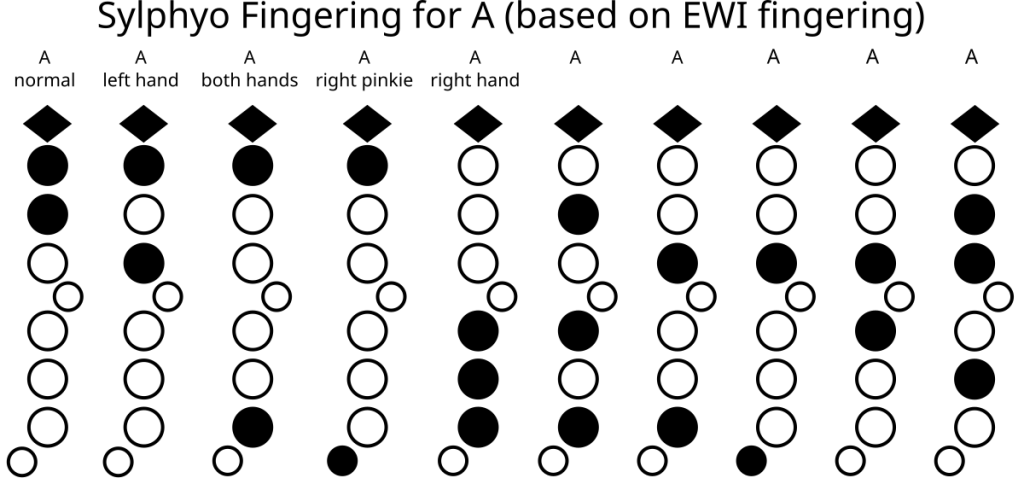
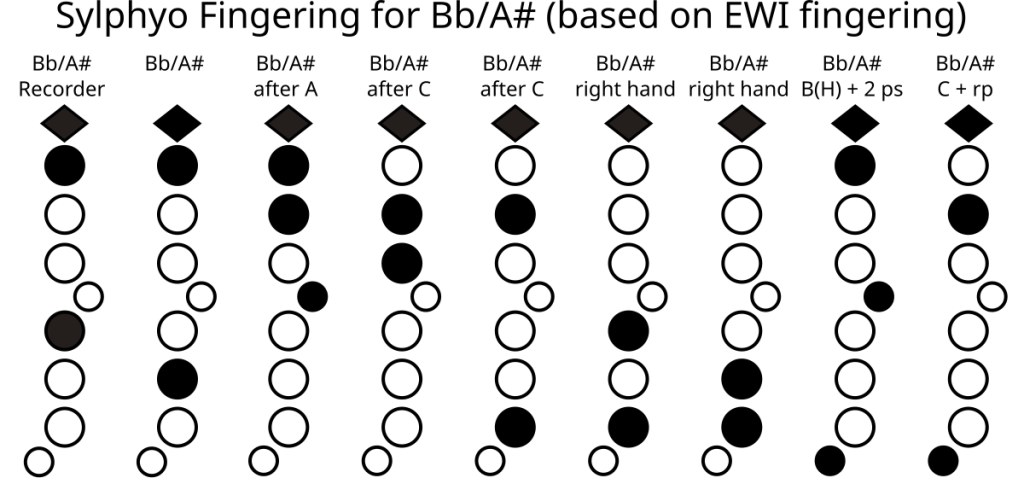
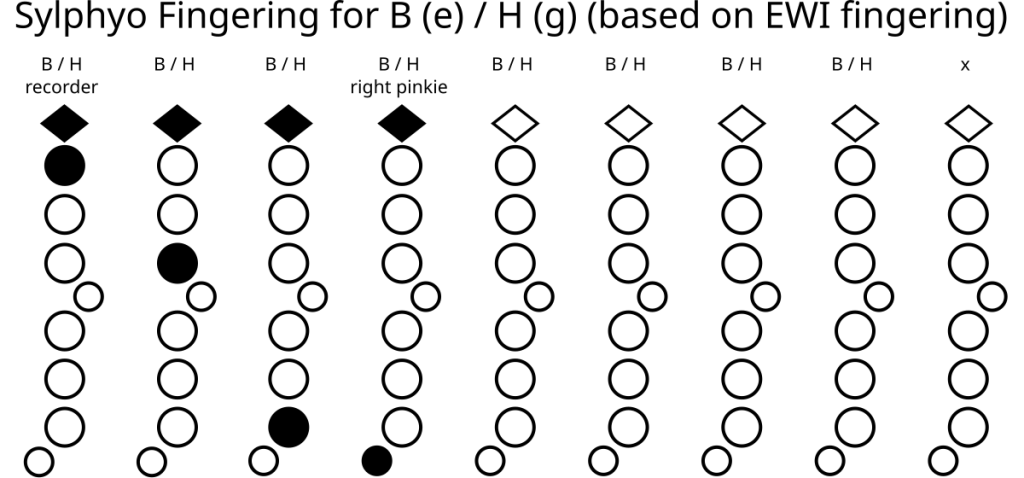
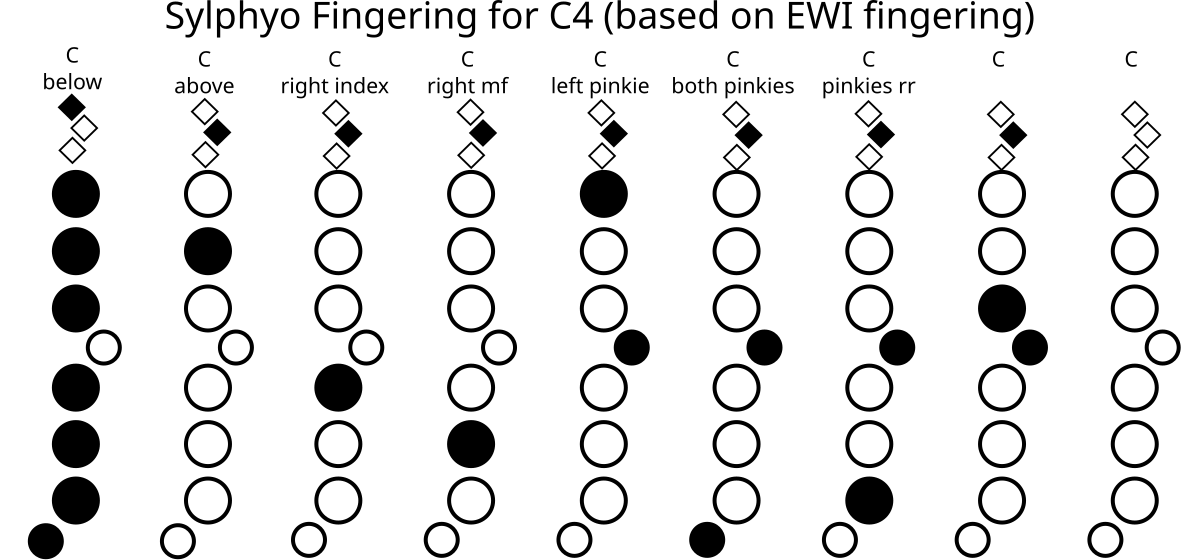
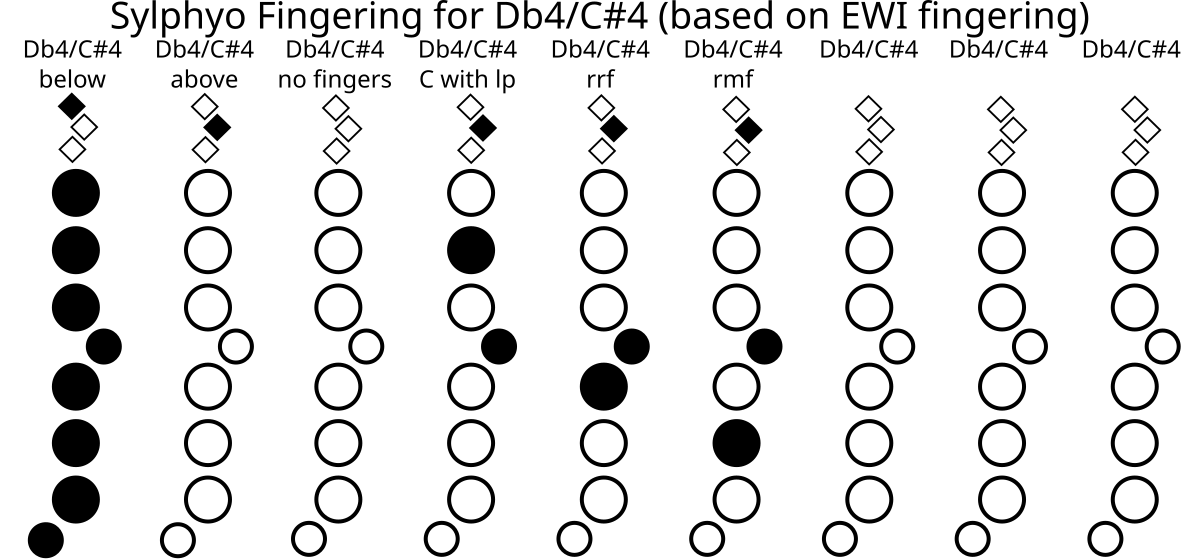
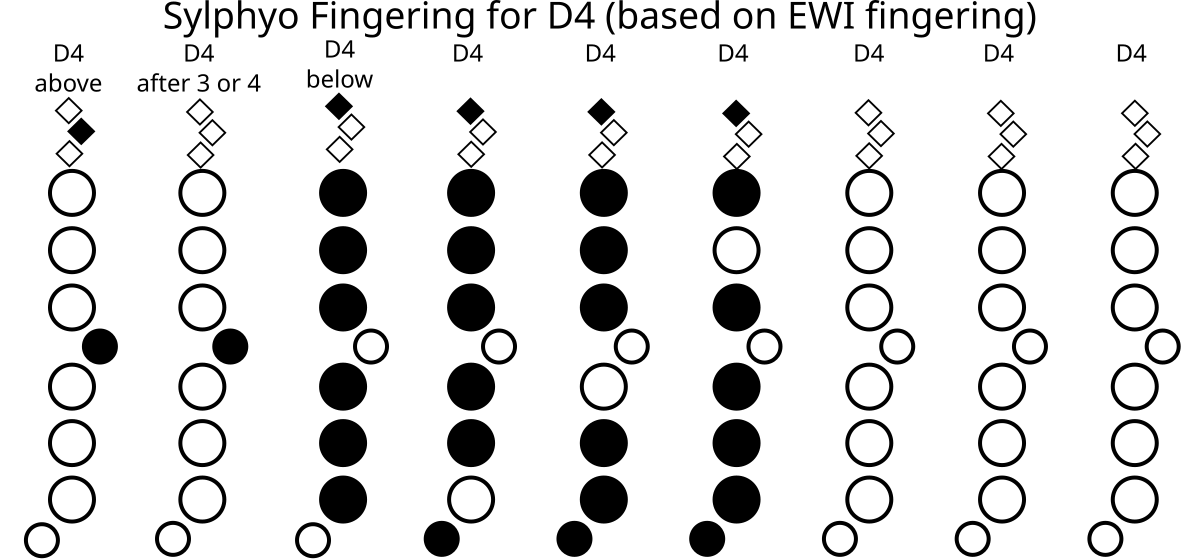
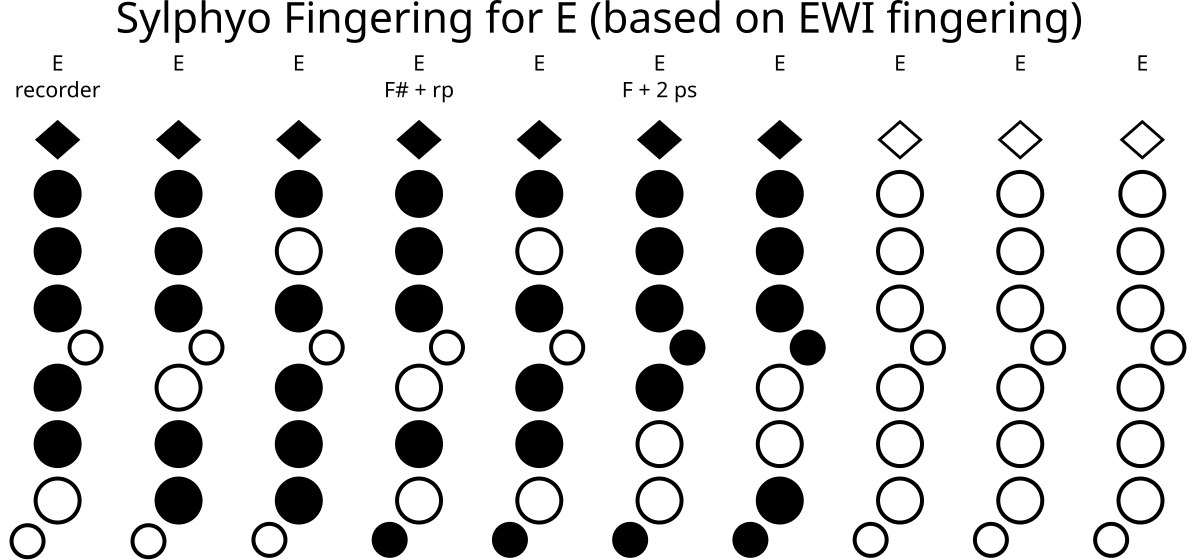
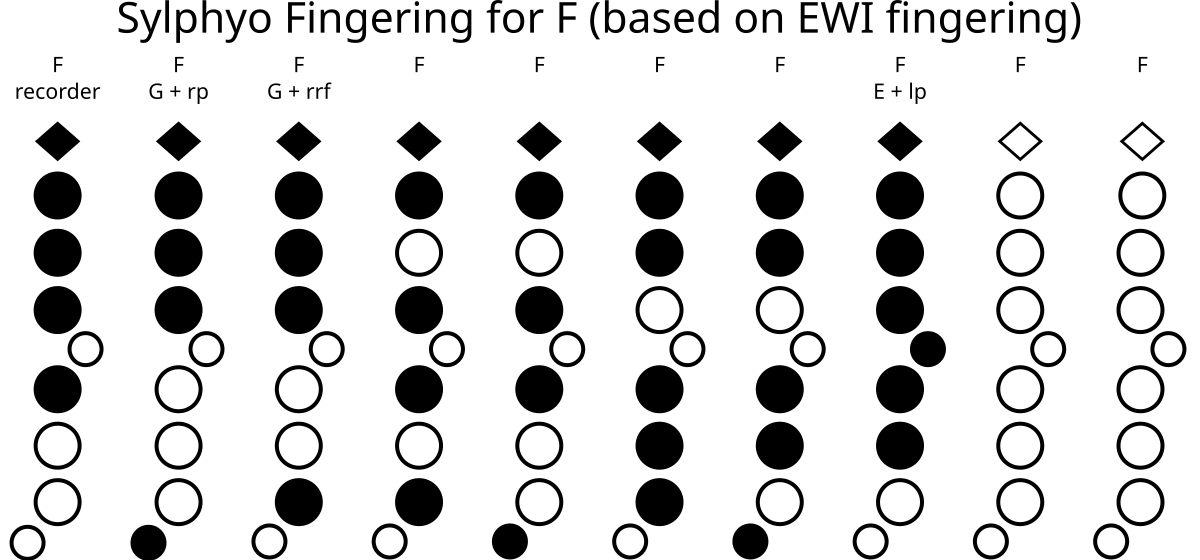
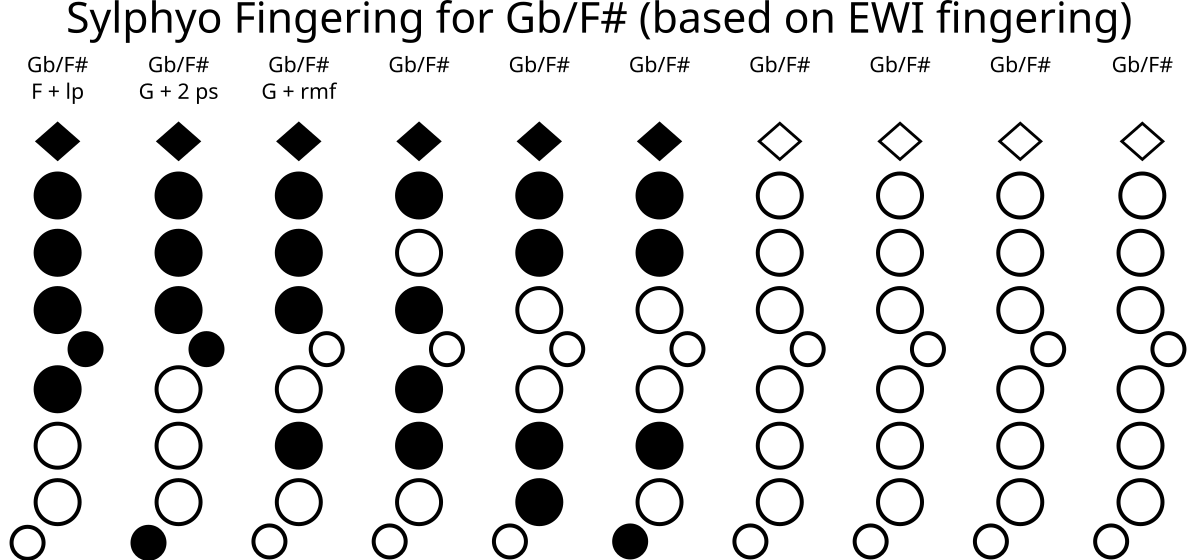
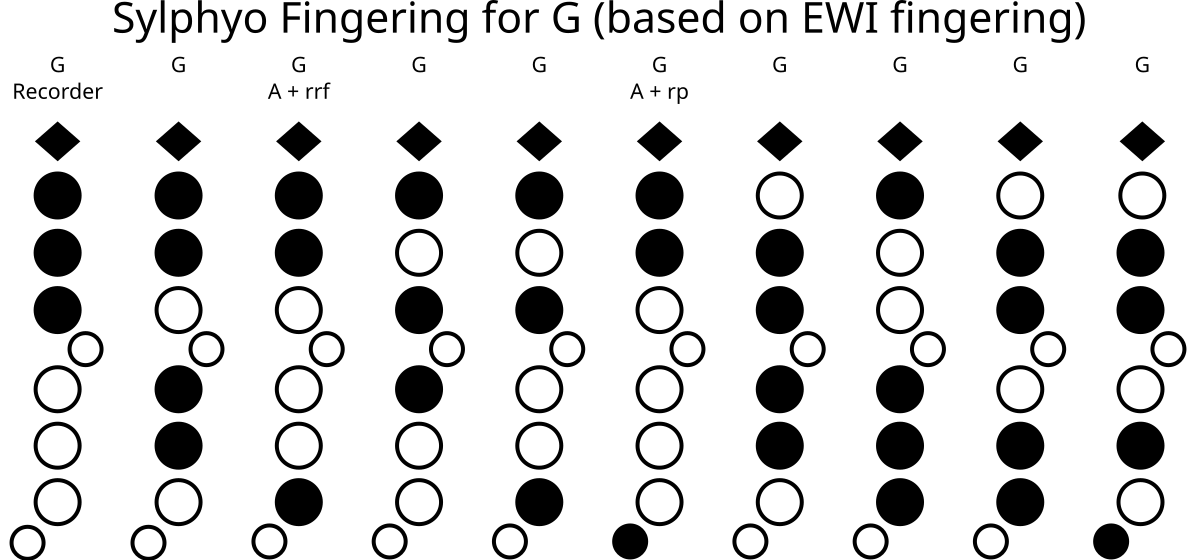
(Un)fortunately a Sylphyo is not an EWI: Whyle a Sylphyo has only two sensors for the pinkies, an EWI has 3 metal rods for every pinkie. This makes EWI fingering more flexible, but also more complicated. But there are still more than enough fingerings for a certain note even on a Sylphyo. With the help of the EWI list above, I tried to puzzle out every possible version for every of the twelve notes of scale. You find my complete list in the appendix.
Go directly to the fingerings:
- C4
- Db4 / C#4
- D4
- Eb / D#
- E
- F
- Gb / Fis
- G
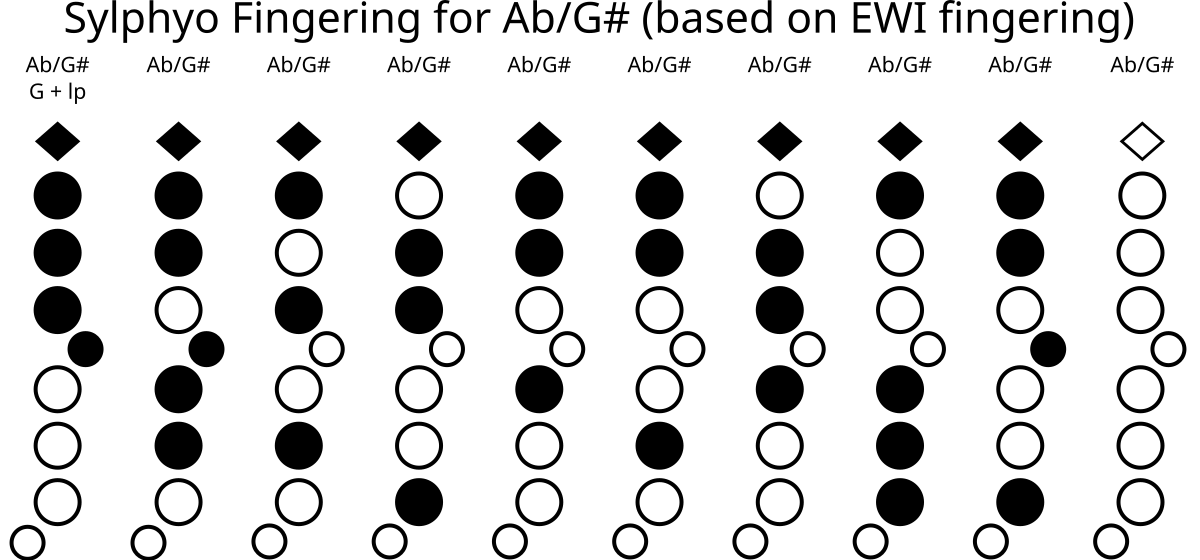
- Ab / Gis
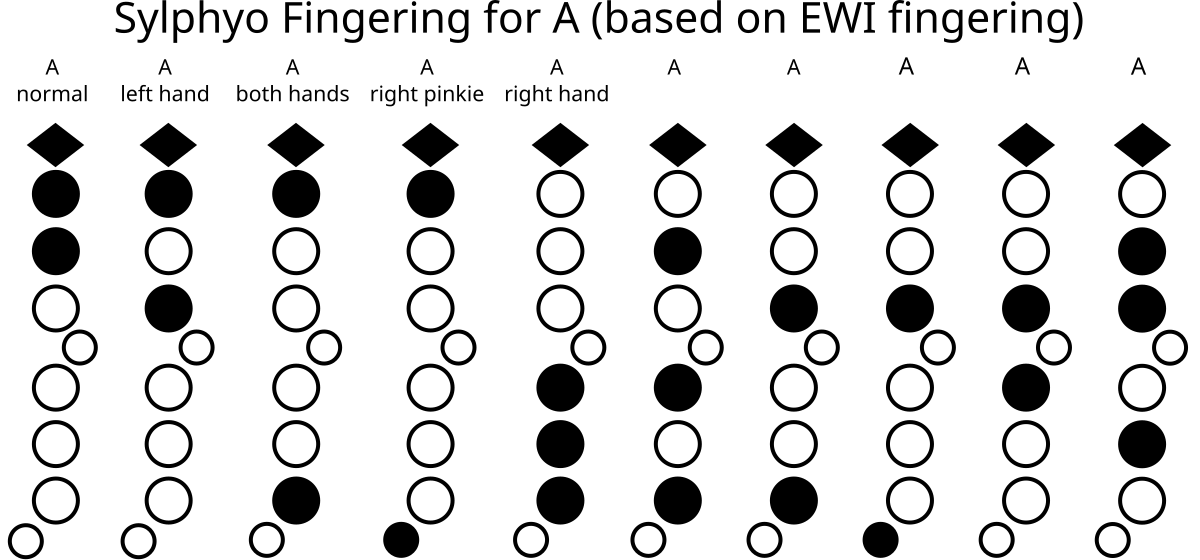
- A
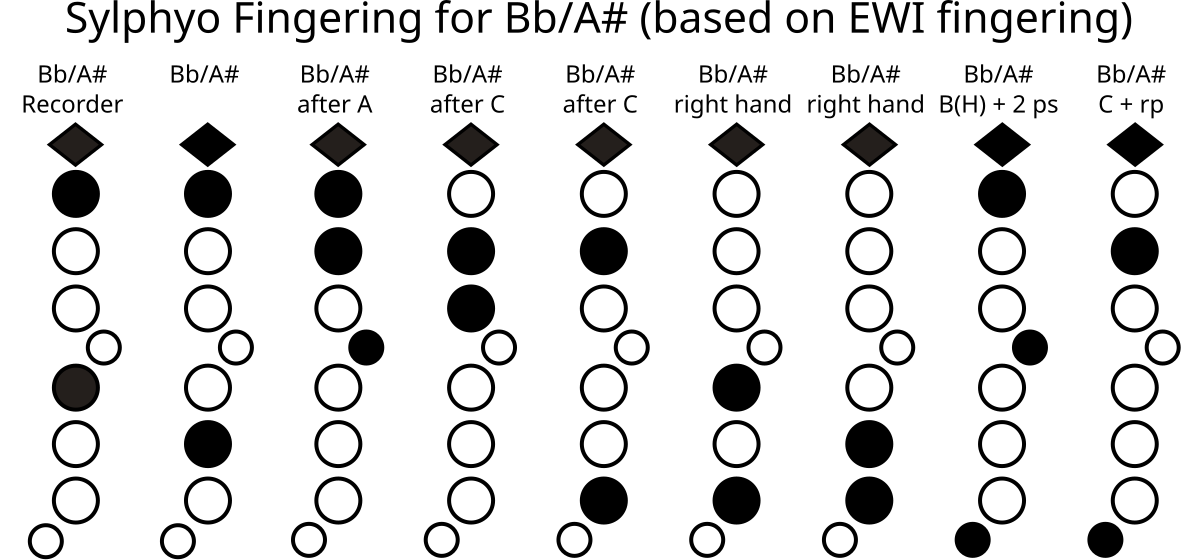
- Bb (German B) / Ais
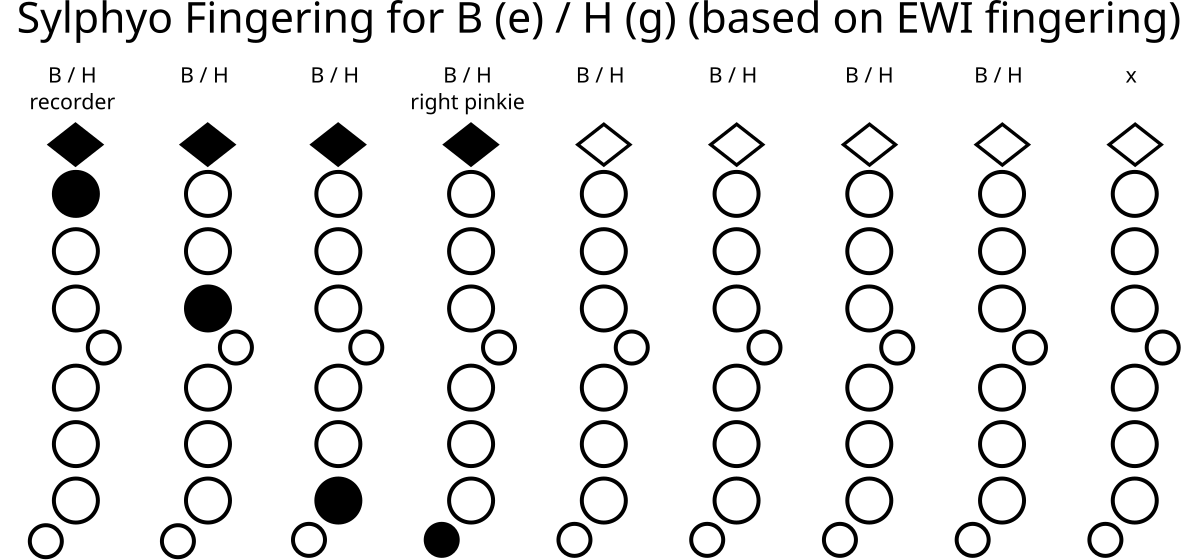
- B (German H)
- Real examples of optimised Sylphyo fingerings
- Gallery of fingerings and examples
- Appendix: All Sylphyo fingerings
Why learn different fingerings for the same note?
In the beginning, to have so many fingerings for the same note seems rather confusing. You might ask yourself, what’s the point of that. If you are happy playing slow ballads that stick to the notes of a scale within one octave, preferably in C major, you’ll never feel the need. I played about 4 years on my Sylphyo without thought to my fingerings. I mostly used the recorder fingerings I learned some 50 years ago! Only when I started Jazz band classes with a teacher who loves quick dancing music, I realized that I’m too slow and that my notes get slurred when I try to get faster. The weaknesses were evident: changing octaves and quick changes where I have to raise and lower several fingers at the same time. These sections often result in ghost notes (see below).
Another web page motivated me to work more systematically on my fingerings: https://bretpimentel.com/flexible-ewi-fingerings/
Real Examples of optimised fingerings
In this ongoing article I document the tricks I’ve found to become faster with some of the jazz songs we play in our band classes. A big thank you goes to my teacher, Stephan Urwyler, who allows me to use excerpts from his jazz arrangments to document my findings.
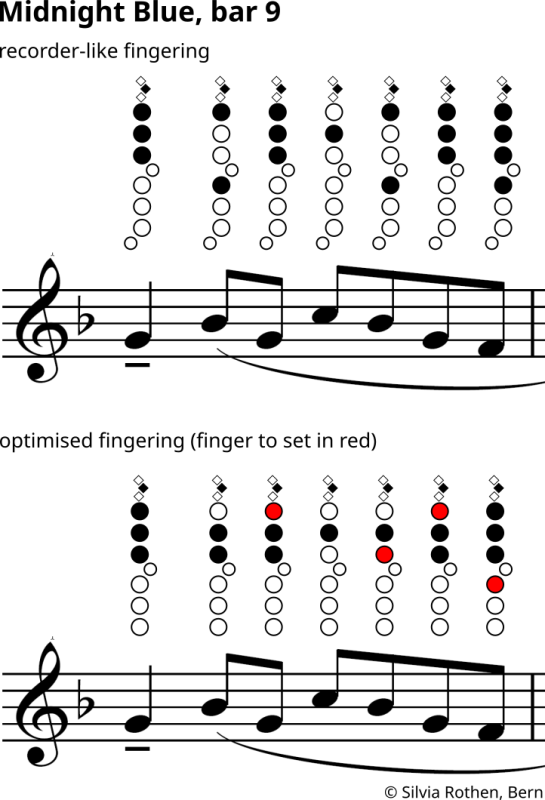
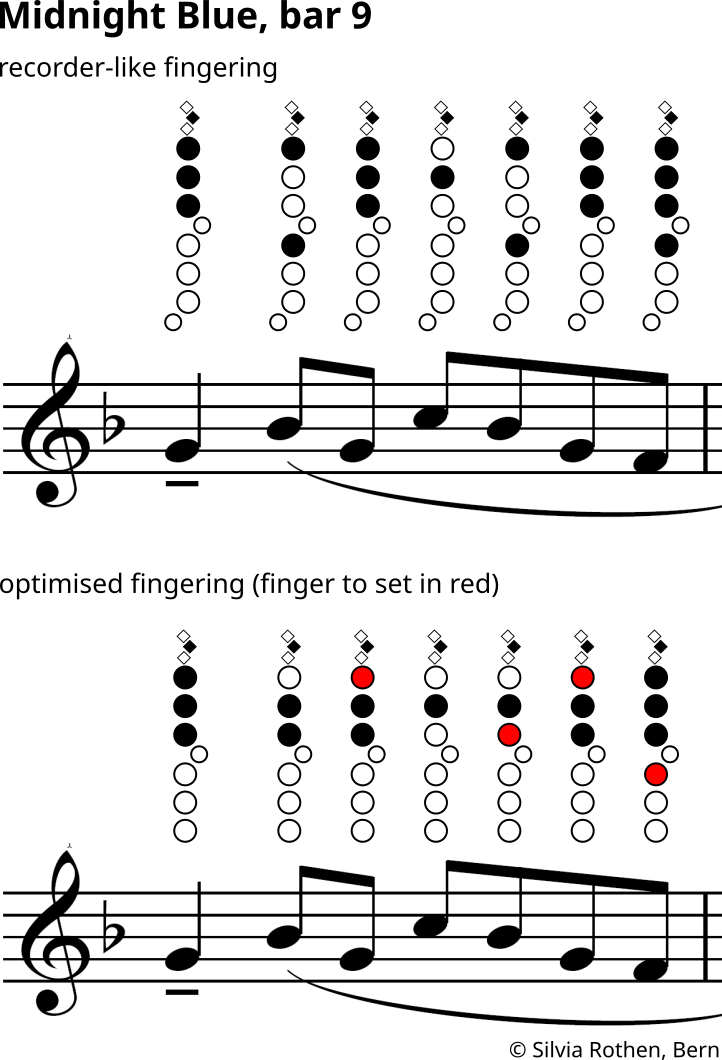
G / Bb / C in “Midnight Blue”, bar 9
The first example shows, how you can go from G to Bb by lifting only 1 finger on one hand instead of moving 3 fingers on two hands. Also from C to Bb you can set only 1 finger instead of lifting 1 and setting 2:
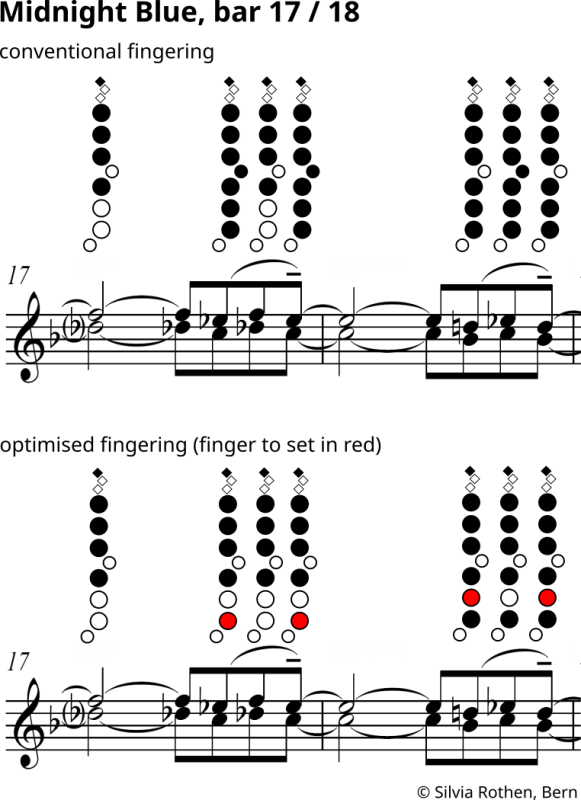
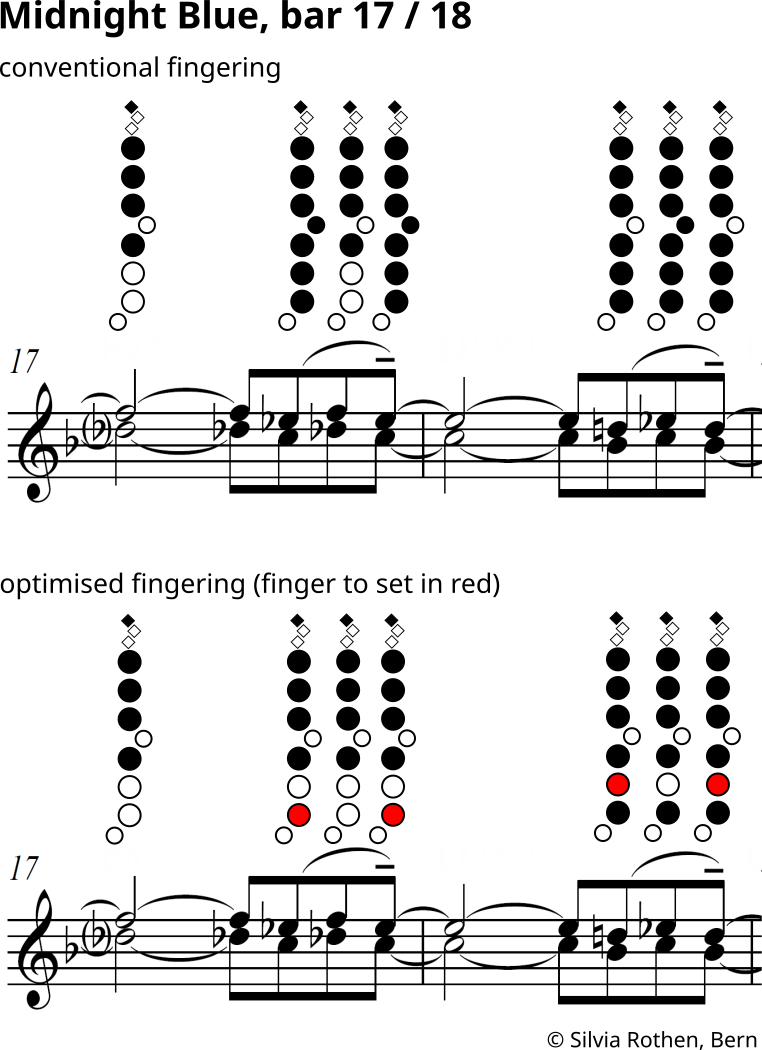
F / Eb / D in “Midnight Blue”, bar 17 / 18
In the next two-bar section of the same song, in the upper voice you only set or lift 1 finger from one note to next, while you lift or set 3 fingers when going from F to Eb and back with a conventional fingering. For the last two notes in bar 18 it’s up to your personal preferences whether you move your left pinkie or your right middle finger.
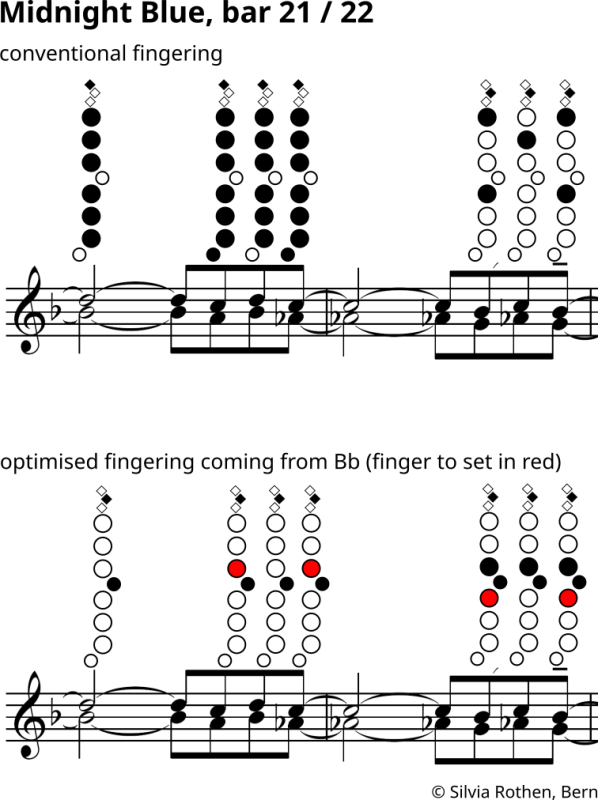
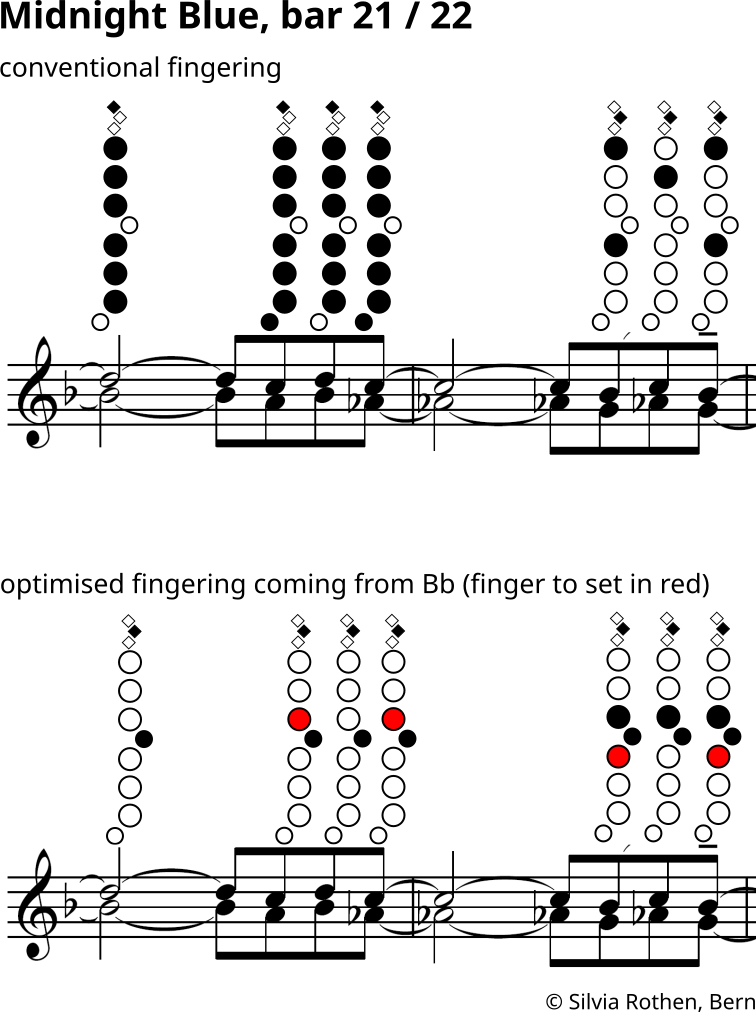
D / C / Bb in “Midnight Blue”, bar 21 / 22
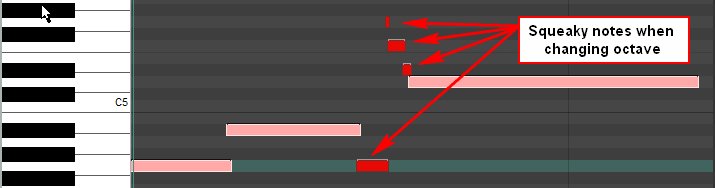
The upper voice in bar 21 and 22 is just the same as above, but one whole note deeper. This brings me to one of my main weaknesses, octave change. On the Sylphyo played with SWAM saxophones, if your thumb doesn’t move in perfect sync with your other fingers during legato sections, you get some short squeaky ghost notes sounding like this:
That’s how it looks like in the midi file:
So the solution for this section coming from a Bb3 was not to change into the upper octave:
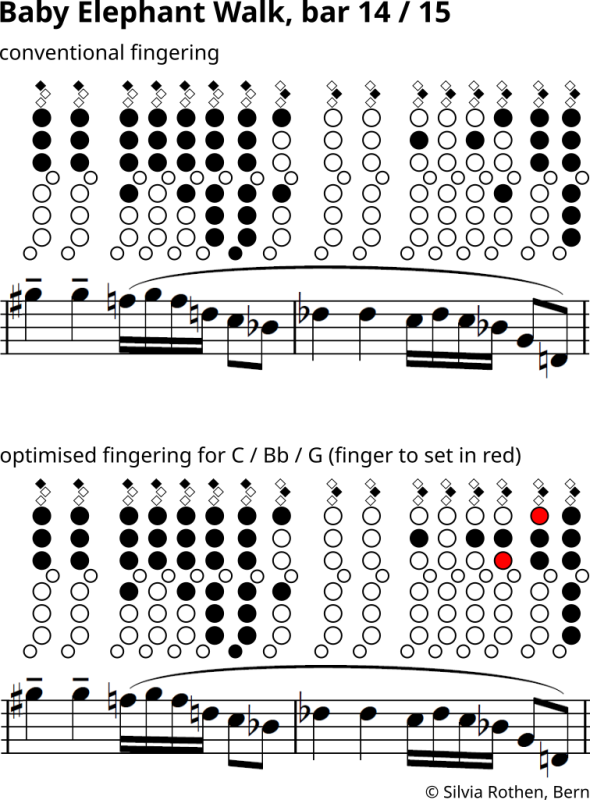
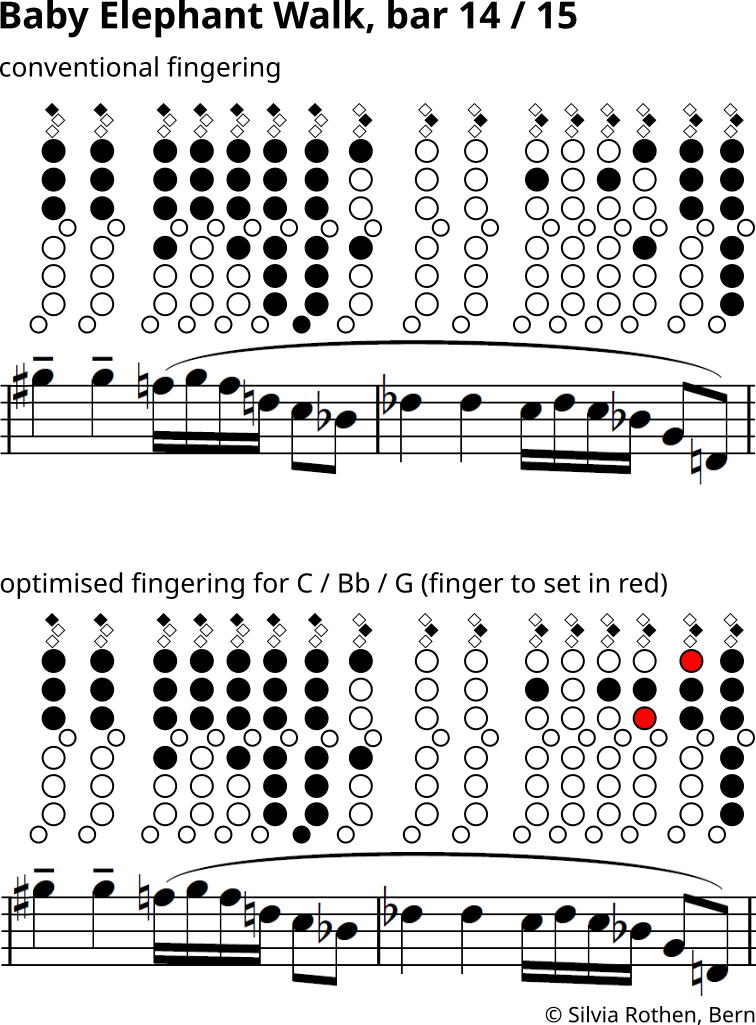
C / Bb / G in “Baby Elephant Walk”, bar 14 / 15
The next example is interesting because in the first bar coming from C in the upper octave I find it more comfortable to play the conventional Bb. In the second bar however I am already in the lower octave, the fingering with only two fingers of the left hand is here the natural choice.
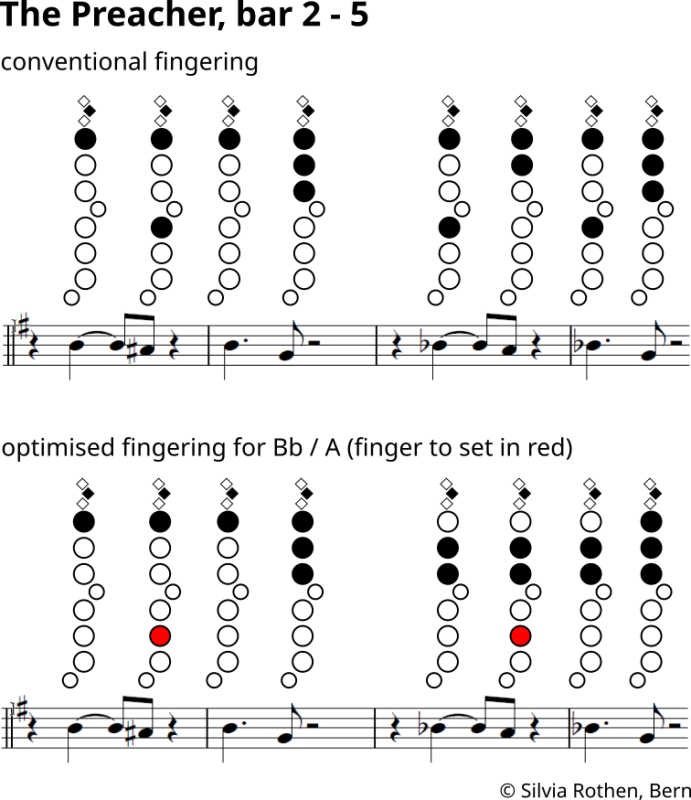
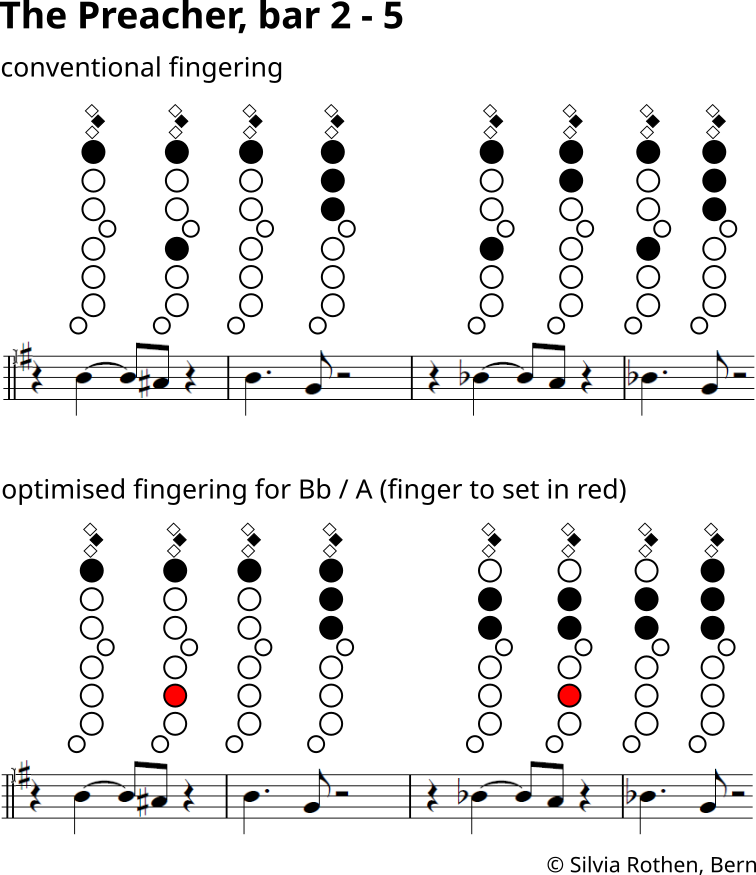
Bb / A in “The Preacher”, bar 2 to 5
In the following bars, it makes sense to change the fingering for A coming from G / Bb.
Gallery of fingerings and examples
Appendix: All Sylphyo fingerings
The three diamond-shaped icons I use only with notes that can be played in two different octaves. If you want to use the following fingerings you have to set your Sylphyo to EWI fingering first: Go into your settings, choose “Keys” – “Fingering” – “EWI”.